
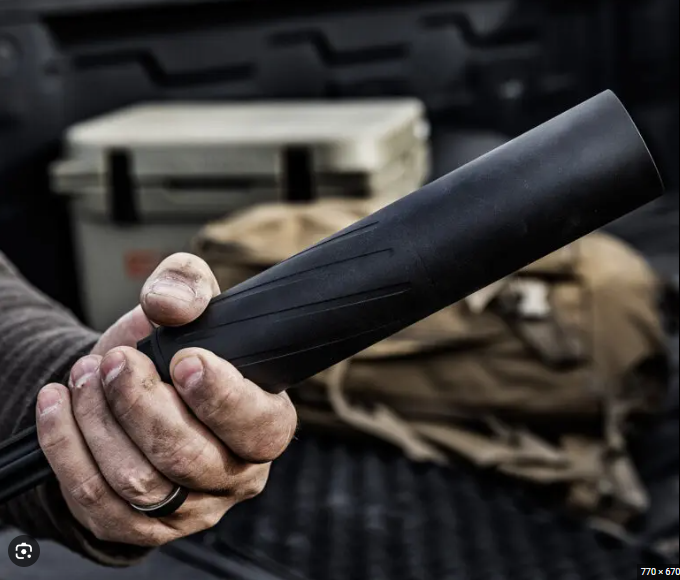
Ask ten shooters what they wish they’d bought sooner, and a silencer lands near the top of the list every time. It’s one of the few upgrades that makes every firearm it touches more comfortable, more accurate, and more enjoyable to shoot. Yet a lot of people never pull the trigger on one — usually because they don’t understand what a silencer actually does, what types exist, or why the paperwork is worth it.
Let’s fix that. Here’s a straight-talk breakdown of silencers, the main types you’ll run into, and the real reasons to own one.
First, Let’s Clear Up the Name
Silencer. Suppressor. Can. They all mean the same thing. "Silencer" is the legal term — it’s what the original 1909 patent called it and what federal law still uses today. "Suppressor" is the term most of the industry prefers because it’s more accurate about what the device does. It doesn’t make a gun silent. It suppresses the noise.
Think of it like the muffler on your truck. The engine still runs, and you can still hear it — but the muffler tames the blast into something your ears can live with. A silencer does exactly that for the expanding gas leaving your muzzle.
Are They Actually Silent? No — And Here’s Why
Hollywood has done real damage here. That little "pfft" you hear in the movies isn’t how any of this works. Most rifle and pistol ammunition travels faster than the speed of sound, which means the bullet itself creates a sonic crack downrange — and no silencer can stop physics. What a silencer does is trap and slow the explosion of hot gas at the muzzle, which is where the bulk of the punishing noise comes from.
Run subsonic ammo through a quality can and you get impressively quiet results. Run standard supersonic ammo and you’ll still hear a crack — but the ear-splitting blast is gone, and that’s the part that damages hearing. Either way, the shooting experience changes completely.
The Main Types of Silencers
Silencers aren’t one-size-fits-all. Just like firearms, they’re built for specific jobs. Here are the categories worth knowing.
Rimfire silencers. Built for .22 LR and other rimfire cartridges, these are the classic entry point. They’re affordable, lightweight, and a blast to shoot — but rimfire ammo is dirty, so the best rimfire cans come apart for cleaning. If you own a .22, this is often the first suppressor people buy.
Pistol silencers. Designed for handgun calibers like 9mm, .40, and .45, these typically use a booster (a Nielsen device) that lets a semi-auto pistol cycle reliably with the added weight up front. A .45-rated pistol can will usually cover most smaller pistol calibers too, which makes it a flexible first buy.
Rifle silencers. This is the workhorse category, built to handle the heat and pressure of centerfire rifle rounds like 5.56/.223 and .308/7.62. A .30-caliber rifle silencer is the sweet spot for a lot of shooters because it’s rated for a wide spread of rifle calibers on a single can. These are what you’ll want on an AR, a bolt gun, or a precision rig.
Multi-caliber and modular silencers. These are designed to run across several calibers and firearms, and many break down so you can add or remove baffle sections to tune length and sound. One can, many hosts — great value if you own a variety of guns.
Rimfire vs. centerfire, sealed vs. serviceable. A final distinction: some silencers are welded shut (durable, low-maintenance, common on rifle cans), while others are user-serviceable so you can pull them apart and clean them (essential for dirty rimfire and pistol use). Match the design to how you’ll actually use it.
A newer development worth mentioning: low-backpressure silencers. Because a can traps gas that would otherwise leave the muzzle, some of it gets pushed back into the action — that’s "backpressure," and it means more gas to the face and a dirtier gun. Modern low-backpressure designs route that gas differently and are growing fast in popularity, especially on ARs.
Why You’d Actually Want One
Here’s the part that changes minds.
Hearing protection that stays on the gun. This is the big one. A silencer knocks a gunshot down from a level that causes permanent hearing damage to something far safer for you and everyone around you. No fumbling with earplugs, no muffs fogging up your optic. It’s protection that’s always there.
Better accuracy and follow-up shots. Less muzzle blast and reduced recoil mean less flinch. A suppressed rifle is noticeably easier to shoot well, and staying on target for a fast second shot becomes second nature.
A better experience for everyone at the range or in the field. In much of Europe — where gun laws are far stricter than ours — suppressors are considered basic courtesy and are barely regulated at all, precisely because they make shooting more neighborly. Indoors, where sound bounces off every surface, the difference is dramatic.
Hunting and property defense. For hunters, a quieter shot means less disturbance to the animal and the land, and better communication with a partner. For anyone defending livestock or property, the reduced blast is easier on the ears in high-stress moments.
A lifetime investment. A quality silencer doesn’t wear out like a consumable. Buy a good one and it can genuinely become an heirloom — a piece of gear you pass down.
What About the Paperwork?
Yes, silencers are federally regulated under the National Firearms Act — but the process is easier than it used to be. As of January 1, 2026, the longstanding $200 federal transfer tax on suppressors was eliminated, so there’s no tax stamp cost on a can anymore. You’ll still complete an ATF Form 4, submit fingerprints and a photo, and clear a background check. And thanks to the ATF’s electronic filing system, approvals that once took many months now often come back in a matter of weeks. It’s a process, but it’s a well-worn path, and it’s absolutely worth it. Availability and rules vary by state, so always confirm what’s legal where you live before you buy.
The Bottom Line
A quality suppressor is one of the smartest long-term investments you can make. It protects your hearing, improves the shooting experience, reduces recoil, and makes every trip to the range or field more enjoyable.
Whether you’re adding your first suppressor or building a complete suppressed firearm, the right equipment—and the right guidance—makes all the difference.